Welcome to WordPress. This is your first post. Edit or delete it, then start writing!
Blog
-
Brandscapes Worldwide Wins ‘Best Developmental Research’ at MRSI Golden Key Awards 2023
 Brandscapes Worldwide was honoured with the ‘Best Developmental Research’ award at the Market Research Society of India (MRSI) Golden Key Awards 2023 for its impactful work with the Parikrma Humanity Foundation.
The project stood out for its ability to combine data-driven insight with deep social purpose. This award marks another proud moment for Brandscapes Worldwide, reaffirming its commitment to using insight and analytics to drive both business and societal growth.
-
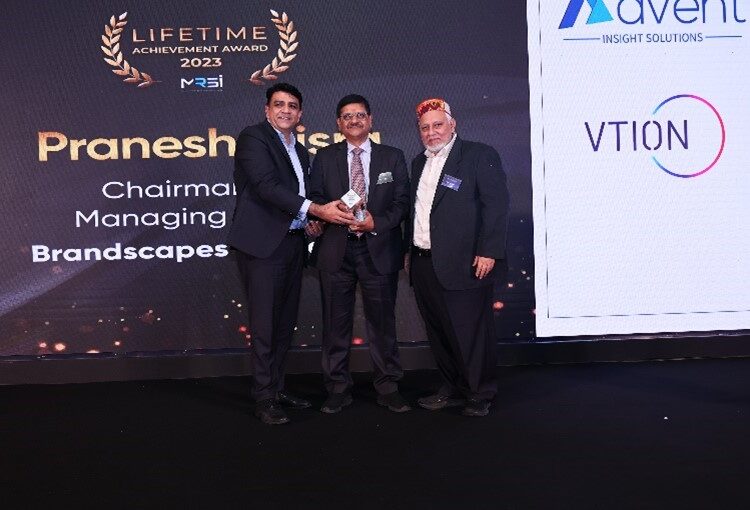
Pranesh Misra Honoured with MRSI Lifetime Achievement Award 2023
The Market Research Society of India (MRSI) honoured Pranesh Misra, Chairman and Managing Director of Brandscapes Worldwide, with the Lifetime Achievement Award 2023 at the Golden Key Awards ceremony.

Instituted in 2019, the Golden Key Awards celebrate excellence and innovation in the insights and market research industry, recognising individuals and organizations that have made a significant contribution to its growth and development in India. The Lifetime Achievement Award is one of MRSI’s highest honours, presented to veterans who have shaped the industry through leadership, vision, and pioneering work.
With over four decades of experience across marketing, brand development, advertising, and consumer insights, Pranesh Misra has been instrumental in driving strategic thinking and innovation across the global marketing landscape. As the founder of Brandscapes Worldwide, a global marketing analytics and insight consulting firm, he has built a reputation for helping leading brands unlock growth through data-driven strategy and human understanding.
Before founding Brandscapes in 2008, Mishra held leadership positions at Lowe & Partners, MashreqBank, and Pathfinders, leading brand and communications strategy for global giants including Unilever, Visa, Coca-Cola, Johnson & Johnson, and HSBC.
A Physics graduate from Delhi University and an MBA from the Indian Institute of Management, Ahmedabad, Mishra is widely regarded as a thought leader and a passionate student of human behaviour and insights.
Through this award, MRSI acknowledged his lifelong dedication to advancing marketing research and his enduring impact on the insights community in India and beyond.
-
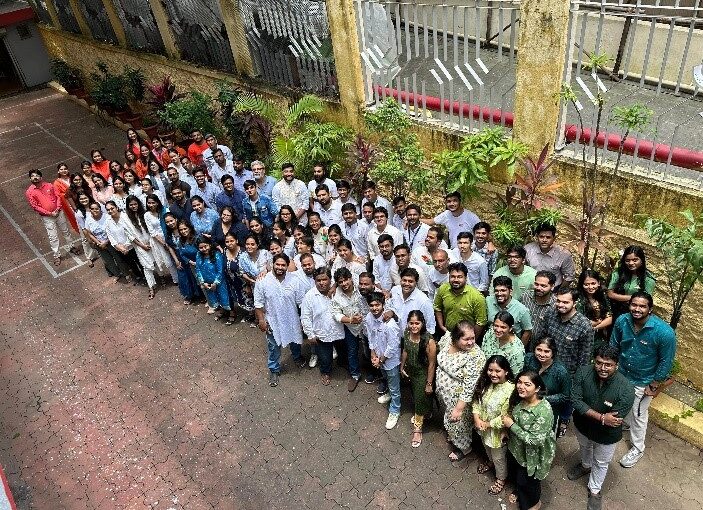
Brandscapes Worldwide Recognized as a Great Place To Work® for the Third Consecutive Year
Brandscapes Worldwide has once again been recognized as a Great Place To Work-Certified™ organization, marking its third consecutive year of this prestigious achievement. The certification reflects the company’s strong commitment to creating a workplace that supports professional growth, personal fulfillment, and a culture built on trust, collaboration, and well-being.
Commenting on the recognition, Pranesh Misra, Chairman and Managing Director of Brandscapes Worldwide, said,
“Earning this recognition three years in a row isn’t about chasing awards. It’s about proving to ourselves, year after year, that we are delivering on our promise of a truly great workplace. At Brandscapes Worldwide, we don’t just grow as a company. We grow as individuals. And that’s what makes all the difference.”
Brandscapes continues to invest in its people through leadership development programs, mentorship initiatives, and engagement platforms that encourage learning and collaboration. Its BSW Socials strengthen team bonds and create meaningful connections beyond work, reinforcing a culture where everyone feels valued and included.
With three consecutive Great Place To Work® certifications, Brandscapes Worldwide remains focused on enhancing employee experience, driving continuous improvement, and setting new standards in workplace culture. Guided by its philosophy of Accelerating Growth, the company is committed to helping both its people and clients achieve their full potential.
-
Use data mining to predict if your product will crash and burn
Marketing based on consumer behaviour data is one of the most fundamental
strategies companies employ to market their products. Then again, could these
behavioural patterns of consumers in the market be always relied on? Could
they be wrong at times?That can be the case if the consumer base shows an initial inclination
towards buying products that eventually fail. These consumers have been called
“harbingers of failure” by Eric Anderson, a marketing expert, in a research
paper published in 2015.In the case study, Eric pointed out that people showed interest in Diet
Crystal Pepsi and Frito Lay Lemonade. You may not have heard of them, which is
exactly the point. They kept on purchasing the products while they could,
which created a sandcastle of a structure portraying a growing demand and
supportive market, which washed away in the long run.The findings of the study were also in line with retail’s early adoption of
big data. One data set covered more than 10 million transactions made over two
years using customer loyalty cards, and the other covered 111 stores in 14
states and more than six years in aggregate. The authors looked at both sets
of data from a national pharmacy.These findings show unequivocally that multiple scenarios may occur,
regardless of the initial performance of the product. This concludes that the
consumer base’s moves are what matter rather than the product.Most companies will only purchase data that they deem to be immediately
useful. If you’re a cosmetics company, you’ll likely buy beauty-related data
from a Nielsen or IRI market research firm, but that will not specify who is
buying the same product in 2021.Since data sets are typically strictly divided, locating cross-category data
can be difficult. He said that a marketing team would purchase data on
exclusively red drinks while he was employed at Ocean Spray. Anderson stated
that “you did not notice anything related to cranberry juice in terms of other
beverages.” “It was the red beverage database, not the beverage database,”
that was at fault.On the other hand, the harbinger effect has a tenuous connection to numerous
real-world data mining and market colliding instances. It’s essentially a
twisted version of basket analysis, in which consumers who appreciate product
X are also inclined to enjoy product Y or combine the two in their
basket.As a result, it may affect customer lifetime value, a metric that enables
businesses to identify their most valued customers and spend resources
appropriately. Whatever the reason, harbinger customers appear to be
beneficial to retailers. They will continue to shop regardless of how many
times you advise them not to.) Categorising clients as red failure flags is a
novel approach to segmenting customers based on particular characteristics or
patterns.5 Main benefits of Data Mining:
-
- Basket analysis
For decades, beer and diapers have been a common topic of discourse.
According to the data-driven merchant, the two unrelated products were
frequently purchased by the same client at the same time of day. They were
young fathers who would treat themselves with a six-pack, either as an
encouragement or save time and money by doing both simultaneously. Although
the incident is probably certainly fabricated, it demonstrates how purchasing
patterns impact organisations’ marketing techniques.
According to a 2019 research by the analytics firm Quantzig, one European
food retailer used a rule-based association dashboard to make real-time
product bundling recommendations based on its different data sources.
According to the business, the packaged advice increased advertising returns
by approximately 300 percent.
Basing your product analysis around a basket analysis like this will enhance
your understanding of market placement. Thorough knowledge of consumer
behaviour tells you what type of market your product needs to be surrounded
by. Placing a product surrounded or close to a market that clashes with its
basket analysis can increase its chances of crashing irrespective of its
usability and demand.
- Basket analysis
-
- Product Recommendation
While product recommendation is similar to e-commerce, the packaged goods
business refers to it as product placement.
According to Mike Egger, AI and machine learning can learn how people tend to
accept recommendations when they buy a product. According to the Journal, a
natural-language processing architecture that merges “billions of historical
data points” has evolved.
If you’re a subscriber to a streaming service such as Netflix or Spotify,
you’ve already seen how data mining for intelligent recommendation-driven
engagement may succeed. How you watch a show that you like and then choose one
of the recommended ones and like it.
Hence, AI and Machine Learning can do your job of trying to recommend your
products with others that are most likely to be bought together. This defines
a constant increase in sales. Not incorporating AI and Machine Learning into
your product sales can quite hinder your product’s potential by a ton.
- Product Recommendation
-
- Customer Value
When it comes to a company’s investment in customer service, not all
consumers are created equal. The point is that companies shouldn’t spend money
“trying to convert ugly ducklings into magnificent swans” but instead focus
their promotional efforts on the value of each consumer.
According to BV.Pradeep “market data analytics and consumer behaviour
research should be seen as a continuum”. It illustrates the idea that the
quality of consumers should weigh more than their quantity.
Your market analysis should in no way clash with your consumer attraction
plan. Therefore, catering to customers based on their value rather than their
numbers will go a long way in letting you know if your product will be there
in the market to stay or crash right away.
- Customer Value
-
- Customer segmentation
Customers can be divided into distinct subgroups to tailor marketing messages
and promotions to each group’s unique needs, which is an obvious benefit.
However, segmentation cannot be random, and data mining identifies relevant
client groups.
Cluster analysis, a data mining approach, is frequently used in marketing
analytics. K-means clustering is a common technique used by data teams to
identify which data points are close together or far away in a distribution.
The relevant customer personas arise from this investigation. From
“mid-income, low annual spend” to “extremely high income, large annual
spend.”
It creates a clear picture of choosing the pricing range and a potential
market for your product. Not all products are meant for everyone, and neither
are all consumers meant for all products. Therefore, data mining and analysis
will tell you where your product will fail and where it won’t. It doesn’t get
any simpler.
- Customer segmentation
- Churn prediction
Keeping a customer is cheaper than acquiring a new one in the eyes of
marketing. An attempt is made to predict the likelihood that a customer will
either quash or not replenish a service, which marketers then use to try and
prevent the turnover. Conventional key aspects of churn prediction are data
mining techniques like regression analysis and classification.
Companies can now use Python libraries like Streamlit to build
classification/churn models with intuitive interfaces. With the increasing use
of machine learning-enhanced churn prediction, it’s possible to get churn
scores much further in the future.
You can figure out how you’re going to deal with churn with your product
shifts and how you will make it easier for the customer to work with you. As a
result, it changes the conversation because it gives you enough time to plan,
decreasing the chances of customers leaving for other products, saving your
product from crashing and burning in the market.
-